MyFitnessPal Review (2026): Free vs Premium and Who It Fits
A current MyFitnessPal review covering its free plan, Premium price, Meal Scan, voice logging, food database, and the people it still serves best.

Chris Raroque
Updated
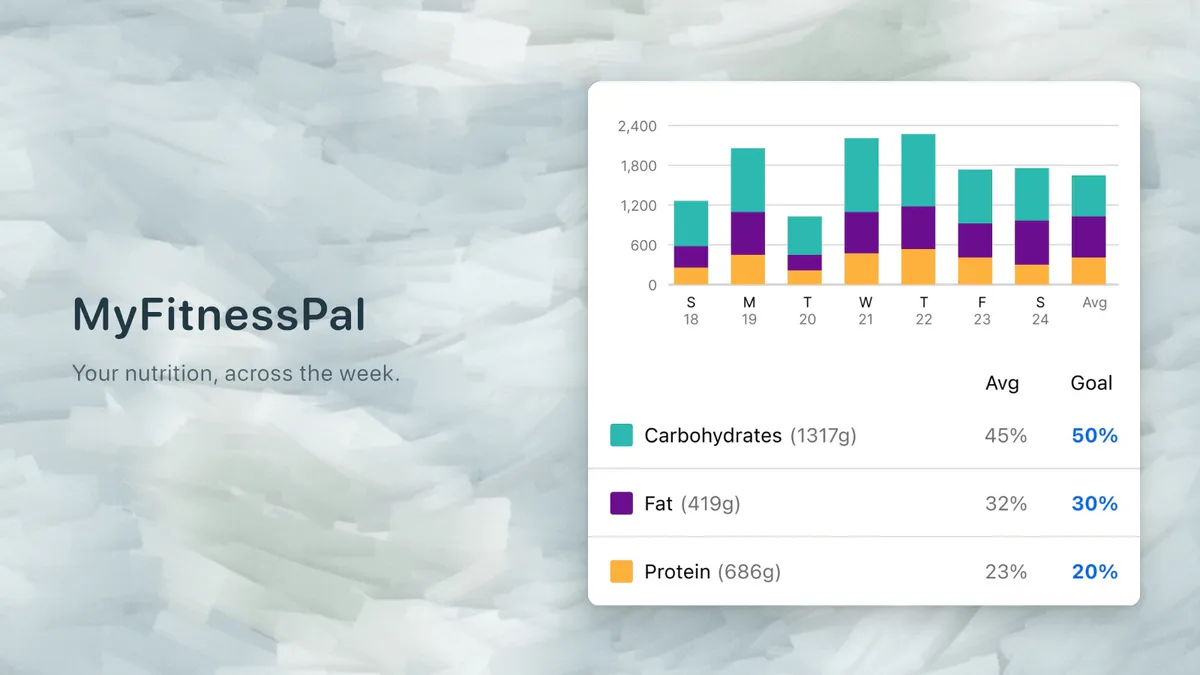
MyFitnessPal is no longer the bare-bones food diary many people remember. The current app has a redesigned Today screen, a database that its US App Store listing puts at more than 20.5 million foods, connections to more than 40 fitness apps and devices, and paid tools for scanning a meal or logging it by voice.
It is also easy to misunderstand. The free plan still includes ordinary food and exercise logging. Premium does not unlock unlimited entries; it adds faster input methods, deeper controls, and an ad-free experience. Premium+ adds the meal-planning layer.
That makes the decision less dramatic than most MyFitnessPal reviews suggest. MyFitnessPal remains a strong choice if you want one established account across iPhone, Android, the web, and a large fitness ecosystem. It is a weaker fit if the part you hate is searching, choosing, and adjusting database entries for ordinary mixed meals.
The short verdict
MyFitnessPal is still one of the most complete nutrition platforms. It is not automatically the easiest food journal.
Choose it if you need broad device support, saved recipes, community features, a huge database, or connections to a varied fitness stack. Its free diary is enough for basic calorie and macro tracking.
Pay for Premium if barcode scanning, Meal Scan, voice logging, custom daily goals, data export, and removing ads are worth the current US price of $19.99 per month or $79.99 per year. Those options appear in the US App Store listing, alongside other offers. Your checkout price can vary.
Look elsewhere if you want a permanent free barcode scanner, detailed micronutrients without paying, or a quiet text-first journal. Our MyFitnessPal alternatives guide sorts those choices by the job they do rather than pretending one app wins every category.
What you get now
| Plan | What it includes | Best reason to choose it |
|---|---|---|
| Free | Food and exercise logging, macros, recipes, measurements, partner connections, diary sharing, printable reports | You want a capable traditional diary without paying |
| Premium | Barcode Scanner, Meal Scan, voice logging, ad-free use, gram-based macro goals, meal-level targets, data export, timestamps, fasting, deeper dashboards | Faster logging and more control |
| Premium+ | Everything in Premium, plus meal-plan building, grocery lists, diet preferences, and meal-prep tools | You want planning as well as tracking |
MyFitnessPal maintains a detailed Free, Premium, and Premium+ comparison. I checked that table, the current US App Store listing, and the linked feature documentation for this update on September 19, 2026. I did not run a new paid, multi-week usability test, so this review does not turn vendor documentation into personal test results.
What MyFitnessPal still does very well
It works almost everywhere
The combination of iPhone, Android, web access, Apple Watch support, and more than 40 partner connections is still a genuine advantage. If you move between a Garmin watch, a work computer, an Android tablet, and a phone, a smaller Apple-first journal may create more friction than it removes.
This is the strongest reason to stay if you already have years of meals, recipes, weight history, friends, and connected services in MyFitnessPal. A slightly nicer input screen rarely justifies abandoning a system that already holds your routines.
The database is broad
MyFitnessPal’s App Store listing advertises more than 20.5 million foods, including restaurant dishes. That breadth is valuable when your meals are packaged, branded, or repeatable. A saved breakfast or a known chain order can become a few taps.
Breadth does not mean every result is equally good. Two entries can describe different serving sizes, cooked states, brands, or recipes while looking nearly identical in search. When two apps disagree, compare the selected source and grams before deciding that one app is wrong. Our guide to why calories differ between apps shows the checks that matter.
Premium has caught up on faster input
Older reviews often describe MyFitnessPal as search-only. That is stale. The current Premium feature list includes:
- Meal Scan, which uses the phone camera to suggest verified database foods.
- Voice Logging, which turns a spoken meal description into editable food results.
- Barcode Scanner for packaged products.
- Multi-Day Logging and Quick Add Macronutrients for people who already know their numbers.
Voice Logging is more constrained than an open-ended journal. MyFitnessPal says it searches the foods available to its diary and recommends including a food name, serving size, and meal name. It cannot log custom foods, saved recipes, exercise, weight, or water through voice. Still, it is a meaningful improvement and should not be omitted from a current review.
Where the friction remains
A large platform asks you to make more choices
MyFitnessPal is trying to be a food diary, fitness hub, progress dashboard, community, recipe library, intermittent-fasting tracker, GLP-1 companion, AI coach, and meal planner. That range is useful when you want it. It can feel like overhead when your only job is recording lunch before you forget it.
The practical question is not whether the app has a fast feature. It is whether that feature becomes your default habit. Meal Scan and voice are Premium tools inside a much larger system. If you keep returning to database search, serving units, and duplicate-looking entries, the app may remain technically capable and personally tiring.
Premium is paying for more than calorie counting
At $79.99 per year, Premium makes the most sense when you will use several paid features. Paying only to remove ads or recover barcode scanning is harder to justify. Cronometer keeps barcode scanning in its free tier and focuses on micronutrients. MacroFactor charges less per year and uses the log to adjust calorie and macro targets. A simpler food journal can put more of its attention into the input itself.
The opposite is also true: if you use MyFitnessPal’s partner integrations, data export, meal analysis, and web app, a narrower tracker may feel expensive for doing less.
A calorie total can still be based on the wrong match
Meal Scan, voice, and database search all end with a selected food record and amount. The polished interface does not remove uncertainty around cooking oil, mixed dishes, restaurant portions, or a brand the system did not identify correctly.
Treat the result as an editable draft. Open the foods, check the amounts, and correct the ingredient that can move the total most. The same rule applies to every AI calorie counter, including Amy.
MyFitnessPal vs Amy Food Journal
The useful comparison is platform versus focused journal.
| If you care most about… | Better fit | Why |
|---|---|---|
| Android, web, community, recipes, and integrations | MyFitnessPal | It has a much broader ecosystem |
| A permanent free basic diary | MyFitnessPal | Amy is paid after its trial |
| Typing a mixed meal as one ordinary sentence | Amy | Text is the default workflow, not a paid shortcut |
| Current restaurant or unusual-food research | Amy | Amy runs a fresh nutrition search for the description rather than relying only on one static database match |
| Meal planning and grocery tools | MyFitnessPal Premium+ | Amy is a journal, not a meal-planning platform |
| A calm Apple-first interface | Amy | It is designed around a small daily logging job |
Amy is not free forever. New users get a three-day trial, followed by $9.99 per month or $99.99 per year in the US App Store. It works on iPhone, iPad, Mac, and Apple Watch; it does not offer Android or a conventional web diary.
The conversion case for Amy is strongest when you have already tried a database-first tracker and stopped using it. Type the same real meal into Amy during the trial. Do not test it with one banana. Test the leftovers, restaurant modification, or homemade bowl that normally makes you postpone logging. If writing the meal and reviewing an editable result feels easier, the narrower product is doing its job.
For a direct feature-by-feature decision, see Amy vs MyFitnessPal. If price is the constraint, skip the sales pitch and use our current list of free calorie tracking apps.
Who should use MyFitnessPal?
MyFitnessPal is a good fit for:
- People with years of saved history and recipes.
- Users who need iOS, Android, and web access.
- Athletes with several connected fitness services.
- Families or coaches who use diary sharing and printable reports.
- People who want meal planning, community, and tracking in one account.
- Free users who do not need barcode, camera, or voice logging.
It is a less natural fit for:
- Someone who mainly eats mixed homemade or local restaurant meals.
- An iPhone user who wants a note-like food journal with minimal navigation.
- Anyone paying for Premium but using only the ordinary diary.
- A person who wants deep micronutrient analysis, where Cronometer is more purpose-built.
Is MyFitnessPal worth paying for?
Premium is worth it when three things are true: MyFitnessPal already holds useful history, you depend on its ecosystem, and its faster paid input methods remove enough daily annoyance to matter.
It is probably not worth paying for if barcode scanning is the only feature you need, if you want the app mainly for micronutrients, or if your real problem is that database logging never became a habit. Start with the free plan and notice where the friction appears. Upgrade for a specific recurring problem, not because the onboarding screen says Premium is the complete experience.
If you are beginning from scratch, set a reasonable target first with our calorie counting guide. The app matters less than choosing a method you can repeat without turning every meal into a research project.
Frequently asked questions
Is MyFitnessPal still free in 2026?
Yes. The free plan includes food and exercise logging, macro viewing, recipes, measurements, partner links, diary sharing, and printable reports. Barcode scanning, Meal Scan, voice logging, ad-free use, data export, and several goal controls require Premium.
Does free MyFitnessPal limit food entries per day?
No daily entry cap appears in MyFitnessPal’s current official Free, Premium, and Premium+ table. Ordinary food and exercise logging is listed for all three plans. Claims that the free diary allows only five entries are stale.
How much is MyFitnessPal Premium?
MyFitnessPal currently lists US Premium at $19.99 per month or $79.99 per year. Premium+ pricing can vary by offer and adds meal-planning features.
Does MyFitnessPal have AI meal scanning and voice logging?
Yes. Meal Scan and Voice Logging are current Premium features on supported iOS and Android configurations. Their results remain editable database entries, so users should still check foods and amounts.
Is MyFitnessPal more accurate than other apps?
There is no useful universal answer. MyFitnessPal has broad coverage, but accuracy depends on the exact food record and serving amount selected. Cronometer is more deliberately built around curated nutrient records. Amy uses a current search-and-review workflow for the meal description. In every app, hidden ingredients and portions still require judgment.
What is the best MyFitnessPal alternative?
Choose by the problem you are solving. Cronometer is strongest for micronutrients. MacroFactor is strongest for adaptive coaching. Lose It is a polished traditional tracker. Amy is strongest for a calm, text-first Apple workflow. The full MyFitnessPal alternatives comparison explains the tradeoffs.
Product features, prices, ratings, and platform details were checked against first-party MyFitnessPal and Apple pages on September 19, 2026. Availability can vary by country, language, device, and rollout.
Header image: a crop from the official US App Store listing, retrieved September 19, 2026.
Keep Reading
All articlesGuides
Why People Quit MyFitnessPal (And What To Use Instead)
MyFitnessPal is still powerful, but many people leave because daily logging feels heavy. Here is what breaks down, what to try instead, and when to keep using it.
Reviews
Best Calorie Tracker App in 2026: What Actually Matters
The best calorie tracker app depends on the logging habit you can keep. Compare Amy, MyFitnessPal, Cronometer, Lose It, MacroFactor, Cal AI, Foodnoms, and more.
Reviews
Best Free Calorie Counter Apps for iPhone
Compare the best free calorie counter apps for iPhone by logging style, free-tier limits, Apple fit, and when a paid text-first tracker is worth it.
Reviews
Cronometer Review (2026): Micronutrients, Pricing, and Who Needs It
A current Cronometer review covering its free plan, Gold pricing, 95 nutrients, verified food database, photo and voice logging, and best use cases.