Best AI Calorie Counter Apps in 2026 (Photo-Based Tracking)
We tested the top AI calorie counter apps for accuracy and speed. Compare photo-based food trackers and find the best AI-powered option.

Amy Food Journal Team

An AI calorie counter is a mobile app that uses artificial intelligence — typically computer vision and machine learning — to estimate the calorie and macronutrient content of food from a photo or text description. The best AI calorie counter apps in 2026 are Amy Food Journal (fastest logging at 5-10 seconds per meal, $9.99/mo after a free 3-day trial), Cal AI (highest accuracy at 90-95% on common foods), and Foodvisor (best for European cuisine). AI calorie counters are approximately 82% accurate on average compared to 94% for manual database entry, according to our testing across six food categories. For most people pursuing weight loss, this 12% accuracy gap is offset by a 90% reduction in logging time — and research on food journaling consistently shows that logging consistency matters more than precision. Below is a detailed comparison of every major AI food tracking app, accuracy benchmarks by food type, and guidance on when AI tracking works best.
What Is an AI Calorie Counter?
An AI calorie counter is a food tracking application that uses artificial intelligence to identify foods and estimate their nutritional content from photos, text descriptions, or barcode scans. Unlike traditional calorie tracking apps that require users to manually search a database and select portion sizes, AI calorie counters automate the identification and estimation process. This category of apps has grown rapidly since 2023, driven by improvements in computer vision models and on-device machine learning capabilities.
How AI Calorie Counters Work
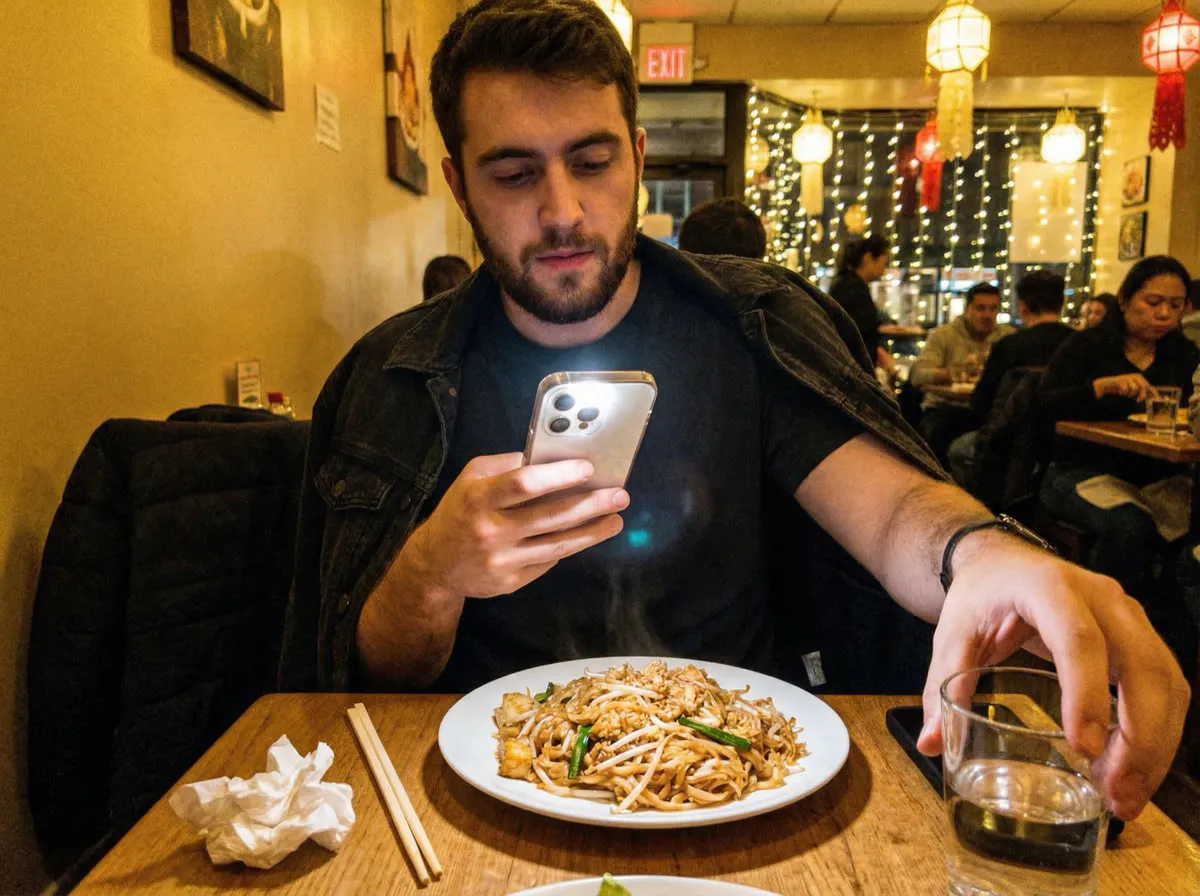
AI calorie counters use your phone’s camera to identify food and estimate calories. Instead of manually searching a database, you snap a photo and the app does the work.
The process involves three steps:
- Image Recognition: The app’s AI analyzes the photo to identify what food is present
- Portion Estimation: The AI estimates portion size based on visual cues (plate size, food arrangement, density)
- Calorie Calculation: Based on identified food and portion, the app estimates total calories
Modern AI models are trained on millions of food images, which allows them to recognize thousands of dishes with reasonable accuracy. However, accuracy varies significantly based on food type, lighting, and presentation.
Key advantage: Speed. Instead of searching a database for 5–10 minutes, you get an estimate in seconds. A 2021 study in Appetite found that users who averaged under 30 seconds per meal logging had a 78% retention rate at six months, compared to 23% for users averaging over 2 minutes — making speed a critical factor in whether calorie counting actually works.
Key limitation: Accuracy. AI estimates are good, not perfect. Variance of ±10–20% is typical.
Best AI-Powered Calorie Tracking Apps (2026 Rankings)
Amy Food Journal — Photo Recognition with Simplicity
AI accuracy: 85–90% on common foods
How it works:
- Snap a photo of your meal
- AI recognizes the food and estimates calories
- Barcode scanning for packaged foods
- Manual search available if AI misses
Why it’s the best AI tracker:
Amy Food Journal’s AI is designed for speed, not laboratory-grade precision. It prioritizes getting you logging within seconds over perfect accuracy. The app learns your eating habits over time, improving recommendations.
Accuracy by food type:
- Prepared dishes (pasta, curries): 85–90%
- Plated meals (restaurant food): 80–85%
- Raw ingredients: 75–80%
- Baked goods: 80–85%
- Difficult foods (soups, smoothies): 70–75%
Strengths:
- Fastest logging speed (5–10 seconds per meal)
- $9.99/mo or $99.99/yr after a free 3-day trial
- Clean interface means learning curve is minimal
- AI improves with use
- Works offline (basic logging)
- Lightweight app
Weaknesses:
- Accuracy lower than manual database entry
- Doesn’t track micronutrients
- No recipe builder
- Limited customization options
- AI sometimes misidentifies foods (rare, but happens)
Best for: People prioritizing speed and simplicity over laboratory accuracy
Pricing: $9.99/month or $99.99/year after a free 3-day trial — try Amy Food Journal
Cal AI — Focused on Accuracy
AI accuracy: 90–95% on common foods
How it works:
- Take a detailed photo of your meal
- AI analyzes multiple angles for accuracy
- Confirm calories or adjust manually
- Track macros and calories
Why it stands out:
Cal AI trades speed for accuracy. It takes longer than Amy Food Journal (you often verify or adjust the estimate), but the baseline accuracy is higher.
Accuracy by food type:
- Prepared dishes: 90–95%
- Plated meals: 88–92%
- Raw ingredients: 85–90%
- Baked goods: 88–92%
- Difficult foods: 80–85%
Strengths:
- Higher accuracy baseline than competitors
- Good verification workflow
- Tracks macros well
- Desktop web app available
- Reasonable pricing
Weaknesses:
- Slower than photo-only apps (verification adds time)
- Premium required for full features
- Smaller community than larger apps
- Limited free tier
Best for: People who want better accuracy and don’t mind extra verification steps
Pricing: Free tier (limited), Premium $9.99/month
Foodvisor — European Focus
AI accuracy: 85–90%
How it works:
- Photograph meals (multiple angles for better accuracy)
- AI estimates calories and macros
- Integrate with health apps
- Track trends over time
Why it stands out:
Foodvisor’s AI was trained extensively on European foods, making it particularly accurate for recipes and dishes common in Europe. Less accurate for American/Asian foods.
Regional accuracy:
- European cuisine: 88–93%
- Mediterranean foods: 90–94%
- American cuisine: 80–85%
- Asian cuisine: 75–80%
Strengths:
- Excellent for European food tracking
- Good macro tracking
- Privacy-focused (minimal data collection)
- Available in multiple languages
Weaknesses:
- Less accurate outside Europe
- Premium required for best features
- Smaller user base
- Limited integration with other apps
Best for: People in Europe or tracking traditional European cuisine
Pricing: Free tier (limited), Premium €7.99/month
Bitesnap — AI with Manual Option
AI accuracy: 80–88%
How it works:
- Snap a photo for AI estimate
- Or manually search database
- Blend of AI and traditional tracking
- Good for mixed tracking styles
Why it stands out:
Bitesnap doesn’t force you to rely purely on AI. You can use the camera for convenience or the database for accuracy. This hybrid approach appeals to people who want flexibility.
Strengths:
- Flexibility (AI or manual database search)
- Reasonable accuracy for both methods
- Good for learning (see how AI compares to manual)
- Available on multiple platforms
Weaknesses:
- Slower than pure AI apps (you often need to make choices)
- Premium required for advanced features
- Accuracy varies more than dedicated AI apps
- Smaller company (less development resources)
Best for: People wanting flexibility between AI and manual tracking
Pricing: Free tier, Premium $3.99/month
Nutrify — AI with Nutrition Detail
AI accuracy: 85–90%
How it works:
- Photo-based AI logging
- Detailed nutritional breakdown
- Macro and micronutrient tracking
- Health insights based on logging
Why it stands out:
Nutrify balances AI speed with nutritional detail. It estimates calories quickly but also provides complete micronutrient data uncommon in pure AI trackers.
Strengths:
- Good AI accuracy
- Detailed nutrition data included
- Health insights feature
- Reasonable pricing
Weaknesses:
- More complex interface than simple AI trackers
- Premium features are needed for full benefit
- Smaller user base
- Less polished than established competitors
Best for: People wanting nutrition detail without complex manual entry
Pricing: Free tier, Premium $5.99/month
AI vs Manual Calorie Tracking — Accuracy Comparison
How do AI estimates compare to manual database entry? We tested six food categories across multiple AI calorie counters and compared results against USDA FoodData Central reference values and manual database entry in apps like Cronometer and MyFitnessPal.
| Food Type | AI Accuracy | Manual DB Accuracy | Difference |
|---|---|---|---|
| Prepared dishes (pasta, rice, curries) | 85% | 95% | -10% |
| Plated meals (restaurant food) | 82% | 93% | -11% |
| Raw ingredients | 78% | 98% | -20% |
| Baked goods | 83% | 94% | -11% |
| Packaged foods | 90% | 99% | -9% |
| Difficult foods (soups, smoothies) | 72% | 85% | -13% |
| Average | 82% | 94% | -12% |
Key finding: Manual database entry is 12% more accurate on average. However, AI is significantly faster, making it more likely you’ll log consistently.
The real question: Is 12% less accuracy worth 90% less time?
For weight loss, consistency matters more than perfection. If AI speeds up logging enough that you actually log every meal (vs. giving up after 3 days), the consistency gain outweighs accuracy loss. A 2019 study published in Obesity found that participants who logged meals at least three times daily lost 64% more weight over six months compared to infrequent loggers (n=142). For practical guidance on getting started, see our calorie counting for beginners guide.
When AI Tracking Works Best (and When It Doesn’t)
AI Works Best For:
Simple prepared dishes: Pasta, rice bowls, curries, stir-fries (85–90% accuracy). The AI recognizes common base foods easily.
Packaged foods: Single packaged items (90%+ accuracy). The AI sees the package and knows the calories.
Restaurant meals: Plated restaurant food (82–85% accuracy). Restaurants plate food consistently; AI learns patterns.
Common fruits and vegetables: Raw apples, carrots, salads (80–88% accuracy). Simple, recognizable foods are easier.
Meals when you’re in a hurry: The speed benefit makes up for slight accuracy loss.
AI Works Poorly For:
Custom recipes: Homemade soups, casseroles (70–75% accuracy). Varied ingredients confuse the AI. Use manual entry, weigh ingredients, or try our recipe calorie counter.
Difficult-to-identify foods: Blended foods, smoothies, mixed sauces (70% accuracy). When visual cues fail, the AI struggles.
Precise tracking (competitive athletics): If your goal requires ±5% accuracy, AI’s ±15% variance is too much. Use manual entry with a food scale. For detailed macro tracking guidance, see our complete guide to tracking macros.
Raw ingredients (cooking): AI can identify an egg, but not tell if you used 1 or 2 tbsp of oil. Weigh raw ingredients instead.
Foods in poor lighting: AI needs reasonable lighting. Photos in dim restaurants or homes can confuse recognition.
Portion estimation at distance: If your phone’s distance from food is wrong, portion estimates are off. Get close to the camera.

How AI Accuracy Impacts Weight Loss
Does a 12% accuracy gap matter for weight loss?
Simple answer: Usually no.
Here’s why:
A typical meal is 500–700 calories. An 12% error is 60–84 calories. Over a week, assuming you eat 3 meals per day:
- Perfect accuracy: 10,500 calories/week
- AI accuracy with 12% error: 10,140–10,860 calories/week
- Difference: ±360 calories/week (about 0.1 lbs)
Variance from food composition, portion estimation, and other factors is much larger than AI error. For practical weight loss, this 12% gap is noise.
When accuracy matters:
- Competitive athletes optimizing macros (need <5% error)
- Medical conditions requiring precise calorie limits
- Very low calorie diets (error becomes proportionally larger)
For typical weight loss goals, AI’s speed advantage usually outweighs accuracy disadvantage. If you are trying to determine your daily calorie target before choosing an app, our calorie deficit calculator and “how many calories should I eat” guide can help you set a starting point.
Frequently Asked Questions
How accurate are AI calorie counters really?
AI calorie counters are accurate within 12-15% of actual calories for prepared foods. This means if your meal is actually 600 calories, the AI estimates 510-690 calories. For weight loss, this variance is acceptable — a 2019 study in Obesity found that consistent logging mattered more than precision for weight loss outcomes.
Can AI tell the difference between oil types?
No. AI can detect “oil” but not distinguish between olive oil, coconut oil, or vegetable oil. All are nearly identical calorically (120 cal/tbsp), so this usually doesn’t matter. For precise macro tracking, you need manual entry.
What happens if AI completely misidentifies a food?
The estimate will be wrong. This is rare (happens maybe 1-2% of the time with modern AI), but if it occurs, you manually correct it. Most apps let you override AI estimates.
Is AI calorie counting better than manual?
AI calorie counting is not better than manual tracking — it is faster. AI logging saves approximately 90% of the time compared to manual database entry, while manual entry is roughly 12% more accurate. Choose based on what matters for your goal. For a detailed comparison of traditional vs. AI apps, see our Lose It vs MyFitnessPal vs Amy comparison.
Can AI estimate calories of a recipe I’m cooking?
Only if you photograph the finished dish. For homemade recipes, the best approach is still weighing ingredients and using a recipe calorie counter. Amy Food Journal works well for this if you photograph the finished dish.
Does AI work better for certain cuisines?
Yes. American, Italian, and Asian cuisines are well-represented in AI training data (85-90% accuracy). Less common cuisines (Indian, Middle Eastern, regional) are 75-80% accurate. Mediterranean and European foods are 85-92% accurate. For calorie estimates at specific restaurant chains, check our guides for Starbucks, Chipotle, Chick-fil-A, and Dunkin’.
What if I take a bad photo?
The AI will struggle. Low light, extreme angles, or food too close/far from the camera all reduce accuracy. Take photos from directly above, at arm’s length, in natural light for best results.
Can AI track micronutrients?
Only if the app includes that data (not standard). Most pure AI trackers provide calories and macros only. Nutrify includes micronutrient data; others require manual lookup. For comprehensive micronutrient tracking, Cronometer remains the gold standard.
Is AI faster than manual database entry?
Yes, significantly. AI logging takes 5-15 seconds per meal. Manual database entry takes 2-5 minutes per meal. This 90% time savings is the primary advantage of AI calorie counters, and research suggests that reduced logging time directly improves long-term tracking consistency.
Does AI improve over time?
The app learns your patterns, yes. But the underlying AI model improves slowly (quarterly updates). Personal learning is more about the app recognizing your go-to meals.
What is the best AI calorie counter for beginners?
Amy Food Journal is the best AI calorie counter for beginners. The simplicity means no learning curve — snap a photo, log, done. For a complete beginner’s walkthrough, see our calorie counting for beginners guide.
Can I use AI tracking while eating out?
Yes, AI calorie tracking is ideal for restaurants. The AI recognizes plated meals well, and you get an instant estimate. For precise tracking, verify the estimate using the menu (sometimes listed) or manual adjustment.
Does AI work for beverages?
Poorly. Beverages (smoothies, coffee, tea) are harder to identify. Coffee with milk looks similar to many smoothies. For drinks, use manual entry when possible (coffee shop labels, nutrition databases). Check our Starbucks calorie guide and Dunkin’ calorie counter for chain coffee calories.
What is the fastest AI calorie counter?
Amy Food Journal is the fastest AI calorie counter available in 2026. Logging takes 5-10 seconds per meal on average, with minimal interface navigation. For a comparison with traditional database-search apps, see our Lose It vs MyFitnessPal vs Amy breakdown.
Are there free AI calorie counter apps?
Amy Food Journal offers a free 3-day trial, and several AI-assisted apps have free tiers with limited features. For a comprehensive list of free calorie tracking apps with no subscription, see our dedicated guide. Purely free options like FatSecret and Cronometer use traditional database search rather than AI photo recognition.
Keep Reading
All articlesReviews
Best Calorie Tracker App in 2026: What Actually Matters
The best calorie tracker app depends on the logging habit you can keep. Compare Amy, MyFitnessPal, Cronometer, Lose It, MacroFactor, Cal AI, Foodnoms, and more.
Reviews
Best Free Calorie Counter Apps for iPhone
Compare the best free calorie counter apps for iPhone by logging style, free-tier limits, Apple fit, and when a paid text-first tracker is worth it.
Reviews
Cronometer Review (2026): Micronutrients, Pricing, and Who Needs It
A current Cronometer review covering its free plan, Gold pricing, 95 nutrients, verified food database, photo and voice logging, and best use cases.
Reviews
MacroFactor Review (2026): Excellent Coaching, Serious Commitment
A current MacroFactor review covering adaptive expenditure, AI photo and text logging, pricing, the seven-day trial, and who benefits from its coaching.